Mortgage – HousingWire |
- HW+ Member Spotlight: Bill Lowman
- Opinion: CRA for IMBs won’t work as advertised
- What does mortgage tech disruption actually look like? SimpleNexus’ Cathleen Schreiner Gates answers
- Mortgage rates remain stuck at 3.10%
| HW+ Member Spotlight: Bill Lowman Posted: 24 Nov 2021 09:20 AM PST 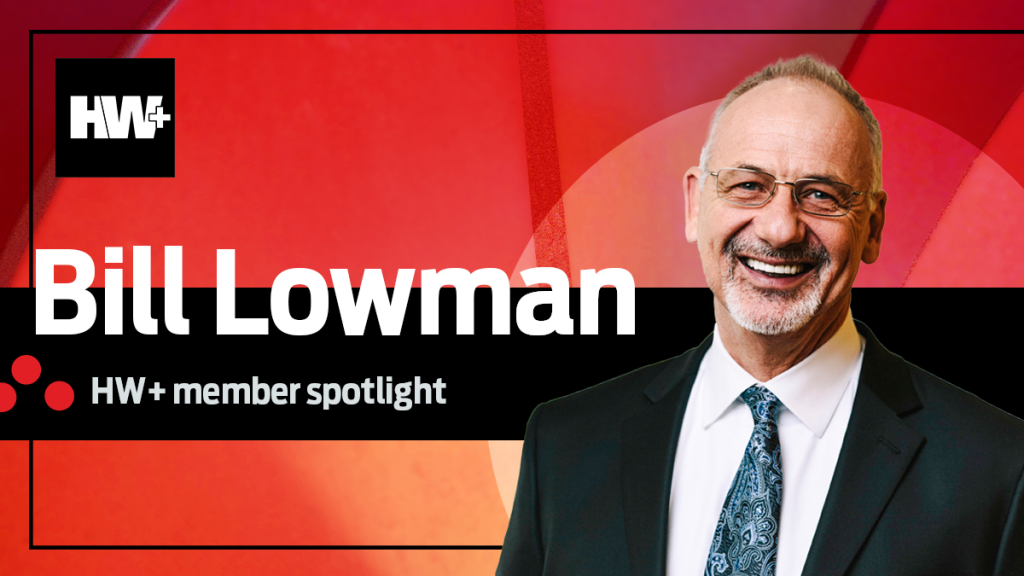 This week’s HW+ member spotlight features American Pacific Mortgage CEO Bill Lowman. Joining the company in 2002, American Pacific Mortgage named him president in 2004, and in 2016 he became CEO. Leading one of the largest independent mortgage banks in the country, Lowman is active in the industry, serving as immediate past chairman/treasurer at the California Mortgage Bankers Association, along with serving on the Mortgage Bankers Association’s Residential Board of Governors. Below, Lowman answers questions about the housing industry: HousingWire: To start off, what is your current favorite HW+ article and why? Bill Lowman: As a grandfather to three little girls, I appreciate the annual "Women of Influence" publication highlighting the significant contribution and leadership of women in our industry. We are working to instill in my granddaughters the belief that there is no limit to what they can pursue, accomplish, and achieve, and publications like this prove that point. HousingWire Daily is also part of my daily routine that I reference to stay on top of industry matters that affect decisions I make as CEO. HousingWire: What has been one of your biggest learning opportunities? Bill Lowman: The challenges of the 2008 and 2020 housing markets all brought different learning opportunities for me as a leader — and in hindsight some of the biggest gifts. The most recent was in 2020 when APM deployed 98% of our workforce across 35 states to a remote, work-from-home environment within days. Like many in the industry, we also experienced staffing challenges and a year of record overtime hours worked to keep up with the unprecedented volume and achieve a record funding year for the company. With all that happening in 2020, as a company, we received our highest NPS score (employee satisfaction survey) since inception. Our leadership team deployed new strategies for communicating and connecting with our employees, and they responded well to them. In fact, some of these strategies made our team members feel more connected to the leadership of APM than they did prior to 2020. HousingWire: Could you name a time where you felt successful in your job? Bill Lowman: To add to my biggest learning opportunity, I feel most successful professionally when I know the people of APM, our APM Family, are more than satisfied with the company, our leadership, their work, the support they're receiving, and the company culture we've built. HousingWire: What is the best piece of advice you’ve ever received? Bill Lowman: My father's advice to "know your audience" has guided me both personally and as a leader for my entire career. HousingWire: What do you think will be the big themes for the housing market in 2022? Bill Lowman: A major focus for the housing market in 2022 will be on affordable housing and closing the gap in the ability of underrepresented populations to achieve homeownership. It's apparent that we have a shortage of housing and are experiencing severe affordability challenges. What I think few understand is the racial gap in homeownership and how it impacts cities, neighborhoods and communities across the country. As an industry, we know the gap between white and Black homeownership is the widest compared with any other racial group. While 76% of white Americans own a home, only 46% of Black Americans do. Closing this gap is a top priority and a passion of mine. Along with other industry leaders and executives, I will be focused on these initiatives as part of the MBA's Convergence Initiative in 2022. HousingWire: What's one thing people are not paying attention to that you think they should be paying attention to in 2022? Bill Lowman: Non-QM and expanded credit products will become more important as the rate-term refi business goes away. Alternatives that are safe and sound loan products will be required to serve everyone's needs and help the industry tackle the housing affordability crisis. The HW+ member spotlight series highlights the impact HW+ members have in the industry and the trends that they’re closely watching. To become an HW+ member, click here, and for more information on HW+ benefits, click here. The post HW+ Member Spotlight: Bill Lowman appeared first on HousingWire. |
| Opinion: CRA for IMBs won’t work as advertised Posted: 24 Nov 2021 08:30 AM PST The state of New York recently adopted legislation applying the Community Reinvestment Act (CRA) to nonbank mortgage lenders, also known as independent mortgage banks (IMBs). This comes after similar action by Illinois. While driven by good intentions, these new requirements are likely to be ineffective and counterproductive — and there are better ways to achieve those intentions. The Community Home Lenders Association (CHLA) previously published an oped in Housing Wire on the subject. CRA for IMBs is a solution in search of a problem. During the past decade, as CRA-regulated banks withdrew from home mortgage lending, IMBs stepped up to become the dominant source of mortgage loans, doing a much better job than banks of lending to underserved borrowers [See CHLA's 2021 IMB Report]. Applying CRA to IMBs fails to recognize that IMBs are very different from banks. CRA was created to require banks that receive taxpayer backing to reinvest in the communities they take deposits from. IMBs have no taxpayer backing, don't take deposits from communities, and instead of diverting capital out of communities, access capital markets to bring affordable mortgages into underserved communities. CRA may be effective with regard to banks providing access to checking accounts, consumer credit, and small business loans. But, as the last decade shows, it has not worked very well for mortgage loans (and banks often meet CRA requirements simply by buying IMB-originated loans). So why do proponents think CRA will be any more effective for IMBs? Still, we hear proponents of CRA for IMBs ask "What's the harm?" As we point out in a recent letter to the Conference of State Bank Supervisors (CSBS), CRA could be counterproductive, imposing burdensome and costly regulations that discourage smaller IMBs from doing business in a state. Our letter highlighted the main evidence we have to date — from Massachusetts, which imposed CRA on IMBs in 2007. According to HMDA data, in 2008, the 26% Massachusetts IMB share of mortgage loans was above the national IMB average of 24%. By 2020, the Massachusetts IMB share of mortgage loans had grown to 55% — but it also had fallen to significantly below the national average of 63%. And HMDA statistics also suggest it had no positive impact on IMB lending to underserved borrowers. The IMB share of mortgage loans to low and moderate income borrowers in Massachusetts increased from 27% in 2008 to 62% in 2020 — a significant increase to be sure, but below the national average increase in IMB lending to such borrowers, from 29% to 67%. CHLA and its IMB members embrace the policy goal of increasing mortgage lending to underserved borrowers. So what could have an impact? Our letter to CSBS outlined more effective actions states could take to help IMBs do an even better job of lending to underserved and minority borrowers. These include: (1) reducing barriers to minority and lower income individuals becoming licensed as a mortgage originator — by waiving the cost of the SAFE Act test and subsidizing the cost of the 20 hours of required SAFE Act pre-licensing courses, (2) ending the unfair use of credit reports to deny mortgage loan originator licenses, and (3) ending requirements that loan originators must be within 100 miles of an IMB office — a restriction that makes it harder for IMBs to serve other communities. What about states that have already adopted CRA for IMBs? Unfortunately, the new laws provide little guidance on how to implement a regulatory structure designed for banks on entirely different types of lenders. So CHLA's letter to CSBS outlined our vision of how CRA in states like New York and Illinois could be carried out, to avoid the discouraging results we see in Massachusetts. The emphasis should be on performance. HMDA data shows a lender's percentage of mortgage loans to low and moderate income borrowers. If a lender's performance is comparable to a statewide average (of all loans, including bank loans), a lender should receive a satisfactory score. There is no reason for a costly and burdensome exam for such IMBs, particularly smaller ones. To avoid discouraging smaller IMBs from lending in a state that adopts CRA, such states should set an appropriate minimum annual loan volume threshold. And, instead of imposing branching requirements, states should pursue our recommendations to help expand the number of low income and minority loan originators, which are IMBs' lifeline to underserved borrowers and communities. States should not impose requirements on IMBs to fund community organizations or housing counseling — the costs of which would be simply passed along to borrowers in the form of higher fees or rates. Community groups do great work to help underserved borrowers. But if a state wants to support community groups, it should do so directly (e.g., by using a portion of the billions of dollars they receive in federal CDBG and HOME block grants). If more funds are needed for homeownership counseling, Congress should increase the funding it provides for this important activity. Finally, enforcement mechanisms should be reasonable and proportionate. The goal should be good performance, not punitive fines or excessive penalties like non-renewal of an IMB's mortgage license. CHLA fully supports the objectives of proponents of CRA for IMBs – which is to do the best possible job of serving underserved borrowers. But CRA for IMBs imposes new compliance burdens that are neither needed nor effective. Instead, let's focus on actions that will bring real results. Craig Thomas is the Policy Director of the Community Home Lenders Association (CHLA). This column does not necessarily reflect the opinion of HousingWire's editorial department and its owners. To contact the author of this story: To contact the editor responsible for this story: The post Opinion: CRA for IMBs won't work as advertised appeared first on HousingWire. |
| What does mortgage tech disruption actually look like? SimpleNexus’ Cathleen Schreiner Gates answers Posted: 24 Nov 2021 08:27 AM PST 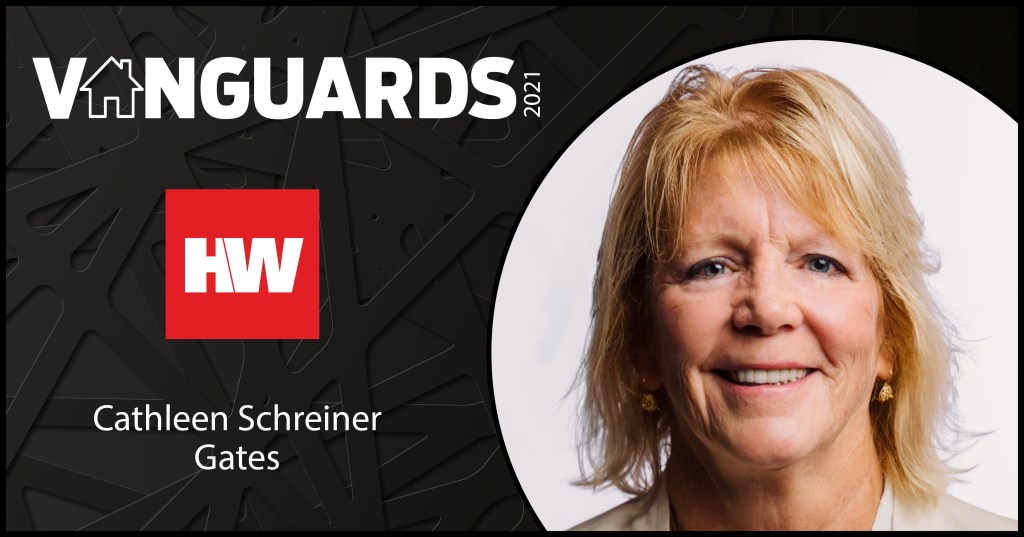 If you added up the impact that HousingWire's Vanguard winners have had on the industry, you'd likely have a comprehensive list of the initiatives that have moved markets forward. These are the leaders who have dreamt, shaped and molded a better way to execute the home-buying journey. From injecting technology into the mortgage process to redefining the real estate agent and home shopper relationship, these leaders have laid the foundations for millions of homeowners. HousingWire sat down with three of these leaders: James O'Bryon, RE/MAX Gold Nation CEO, Cathleen Schreiner Gates, SimpleNexus CEO, and Phil Shoemaker, Homepoint president of originations, to learn more about the housing trends they're closely watching, what they think will define 2022 and what they hope people remember them for when they retire. Brena Nath: First off, congrats on being named a 2021 Vanguard. Who would you want to thank for helping you get where you are today? Cathleen Schreiner Gates: I have to go with two people. The first one is Jonathan Corr, who was the executive that hired me at Ellie Mae and brought me into the mortgage business. He had a technology background similar to mine, and he saw in my background what he felt was needed at Ellie Mae. That just kind of got me into the space, and you know the old adage, "Once you're in the space, you never leave the space." So, giving me the opportunity to lead and empowering me to do the things I knew we needed to do to grow as a company, that's really what I think was the springboard for me to be where I am today. And then the second one would be Ben Miller and Matt Hansen, the co-founders of SimpleNexus, along with John Aslanian, who I had worked with at Ellie Mae for years. John said, "She can help us. Let's talk to her. She can help us grow." And I met them and was sold immediately. So having the opportunity I'm in today is clearly due to the co-founders of SimpleNexus. Brena Nath What's one accomplishment in your career that you're really proud of? Cathleen Schreiner Gates: Right now, I'd really have to list the work that I did at Ellie Mae to drive the incredible growth when I was there. When I joined, they had just IPO-ed earlier that year. They had closed the year in the low $50 million range, and over six or so years, we got it to half a billion in revenue, completely organizing ourselves for growth. So, I'm pretty proud of that because it allowed me to use everything I'd ever done or learned in my entire career. I got to apply it and see the results. Along with that, the most satisfying things are always helping leaders grow and mature into becoming leaders they want to be and giving them the empowerment to make the changes that they're so skilled to make. Brena Nath: How are you helping move markets forward? Cathleen Schreiner Gates: You know, I'm tech biased. I've always believed that technology for technology's sake is useless. But if you use technology as an enabler to disrupt and move an industry forward, that's super powerful. So, I always look at how technology can actually change the game in a market, allow the stronger players in that market to be even stronger if they adopt and apply technology solutions in the right ways. So, I always look at that first. There are three sides to the triangle. So, I look at the technology enablement, and then, I look at the talent mix. And if you've got the right talent and the right technology, the third one would be the right sort of processes, looking at the way you're going to operate. Those are a pretty killer trifecta. So, I look at everything through those three lenses. Brena Nath: What are two trends in the mortgage and real estate industry that you're closely watching? Cathleen Schreiner Gates: I would say there's a convergence going on of two markets that have historically been separate verticals but sort of collide in positive ways and that's the real estate market and the mortgage market. I think those markets are converging because to the borrower, they want a seamless journey from their point of thought. Like, maybe I'm going to buy a house and then start looking through the real-estate alternatives and then need to flow straight into their mortgage process. Historically, these have been two separate plays that are now coming together and integrating and weaving together into a seamless borrower experience. And guess what the enabler for that is? Technology. I think the other thing is just the speed with which the manufacture of a mortgage is happening. There will be a point in time where the mortgage will happen before you can organize for the movers to come move your stuff. So, I'm looking at all the different emerging technologies and these small companies that are playing with a piece of the process and automating it just a little bit more, bringing intelligence to it a little bit more, taking eyeballs off of things that automation can help with. I think that's the other significant trend — investments in technology to speed up and take cost out of the process. The convergence of a lot of these. Those are the trends we're looking a lot at. Brena Nath: The past two years have been filled with a lot of uncertainty; what factors do you think will define 2022? Cathleen Schreiner Gates: I think everyone's talking about this to be honest and the reason is it's real. The lenders out there have to compete for the borrower more than they've ever had to do. We have this massive bubble of borrowers coming into the market, and a lot of these homeowners coming into the market are what I call digital natives. They grew up in a digital world and so some of the conventional ways that lenders might've attracted borrowers are going to fall a little bit to the wayside. And the refis are going away, so it's sort of how do you attract that borrower? How do you differentiate yourself from the digital natives to the millennials, and frankly, all the different demographics out there who are actually adopting more and more of a digital approach to their lives? So how do you compete for the borrower? I think that is massively important to the lenders. And then coming out of the kind of year that the lenders have had, they had to really staff up to accommodate the volumes. So how fast do they staff down? How fast do they get efficient again and sort of reading the tea leaves and figuring out, "You know, the profitability on a loan is going down. Our costs are going up. Are we overstaffed?" Some lenders will be far better equipped to deal with it than others because they've been through these cycles before. And they have a sense of how to burst resources and then contract and then burst again and contract. A lot of the smartest lenders look for ways they won't have to burst again the next time if they can automate, streamline and get smarter about the process. Brena Nath: After you're finished with your career, what do you hope people remember you for? Cathleen Schreiner Gates: I had the opportunity to sort of retire two years ago and then I kind of got pulled back into SimpleNexus, so I've seen a little bit of what this is about. I was blown away by the sentiment coming from people who felt that I helped them build their career and be at a place where they could contribute and feel good about their career growth. Because we're spending a lot of time doing this thing called our career. So absolutely, the most satisfying thing for me throughout my whole career has been helping people develop into strong leaders, watching them blossom, watching them have an impact and them feeling good about it. Brena Nath: To wrap, what's one piece of advice you would give people in this industry? Cathleen Schreiner Gates: To me, in this industry and having been in other industries, I think the industry is still at the discovery stages of what technology can do to move the industry forward. So other vertical industries kind of grabbed on to tech a little bit earlier and maybe are a little bit further up the maturity curve. I think the mortgage industry, being as massive as it is, has an unlimited opportunity to really embrace technology and do fun things for it. We're just at the beginning. So, the thing I would say to every leader is to sharpen your mind and learn about what technology enabling capabilities are out there that can help you with your business. Don't put it in a box and let somebody else be the expert. Develop some knowledge of it. Brena Nath: Is there anything else you would like to add? Cathleen Schreiner Gates: Be curious. Look what's out there. And the other thing I would say is to look through the lens of sustainability. In other words, I've been advocating looking at tech, but a lot of these ideas come and go very quickly. They're like a fast burn. So, the layer I would add in there would be to look hard at the sustainability of anyone you partner with for any approach you take because you're going to maybe make a decision and then that's going to disrupt the way people operate inside your organization. And so, you pay a little bit of a price to disrupt. That's change management. So, make sure this thing's going to be sustainable for you, and it's going to be a decision you're going to be comfortable living with for a few years, not a few months. To read the full October/November Issue, click here. The post What does mortgage tech disruption actually look like? SimpleNexus’ Cathleen Schreiner Gates answers appeared first on HousingWire. |
| Mortgage rates remain stuck at 3.10% Posted: 24 Nov 2021 06:56 AM PST Mortgage rates remained at 3.10% in the week ending Nov. 24, according to the latest Freddie Mac PMMS mortgage report. A year ago at this time, the average 30-year fixed-rate loan averaged just 2.72%. Sam Khater, Freddie Mac's chief economist, said interest rate volatility has been low, despite the noise around the economy, inflation, and monetary policy. "For most of 2021, mortgage rates have stayed within half a percentage point, which is a smaller range than in past years." The survey focuses on conventional, conforming, and fully amortizing home purchase loans for borrowers who put 20% down and have excellent credit. Economists at Freddie Mac said the 15-year fixed-rate mortgage averaged 2.42% last week, up slightly from 2.39% the week prior. It's also higher than it was a year ago, at 2.28%. Meanwhile, the five-year ARM dropped slightly to 2.47%, down two basis points from last week. A year ago, 5-year ARMs averaged 3.16%. Mortgage rates tend to move in concert with the 10-year Treasury yield, which reached 1.67% on Nov. 23, up from 1.63% a week before. Lenders – Now is the time to prioritize lead generation HousingWire Editor-in-Chief Sarah Wheeler and Deluxe Senior Business Development Executive Mark McGuinn discuss the challenges lenders are facing to optimize lead generation, even as mortgage rates continue to change. Presented by: DeluxeDespite higher rates, mortgages applications increased last week due to a strong housing demand. The overall market composite index rose 1.8% for the week ending Nov. 19, according to the Mortgage Bankers Association (MBA). "Purchase activity increased for the third straight week, as housing demand remains robust, even as the housing market approaches the typically slower holiday season," said Joel Kan, the MBA's associate vice president of economic and industry forecasting, in a statement. Regarding refi activity, Kan added that "borrowers continue to lock in mortgages in anticipation of higher rates in the future." The MBA, for instance, has projected rates to hit 4% by the end of 2022. The trade organization also has forecasted purchase mortgage originations to grow 9% to a record $1.73 trillion in 2022. Refis are projected to fall 62% to $860 billion next year. The post Mortgage rates remain stuck at 3.10% appeared first on HousingWire. |
| You are subscribed to email updates from Mortgage – HousingWire. To stop receiving these emails, you may unsubscribe now. | Email delivery powered by Google |
| Google, 1600 Amphitheatre Parkway, Mountain View, CA 94043, United States | |


No comments:
Post a Comment