Mortgage – HousingWire |
- Why the private-label market will chill in 2022
- UWM waives MI with a 10.01% down payment, but there’s a catch
- Is UWM’s plan to shed the “meme stock” label?
- Mortgage rates climb back up, to 3.10%
| Why the private-label market will chill in 2022 Posted: 18 Nov 2021 11:25 AM PST  Securitizations backed by jumbo loans and mortgages on residential investment properties have propelled a rebounding private-label market in 2021. That gravy train, however, is expected to slow down some as we turn the corner into 2022 — with rising interest rates, spiking home prices and the expanding reach of government-sponsored enterprises (GSEs) Fannie Mae and Freddie Mac serving as the brakes. Still, the balance of the year looks promising for the private-label market, according to MAXEX. Loans traded through the Atlanta-based digital mortgage exchange have been included in 100 private-label securitization transactions since its launch in 2016, the company reports. MAXEX lays out its market prognostications in a recently released report covering private-label securitization activity for the month of October. And the elephant in the room is interest rates. "We do expect the PLMBS [private-label mortgage-backed securities] market will downshift slightly as supply wanes while interest rates rise, creating a more competitive marketplace," the MAXEX report states. For the jumbo-loan market, the report notes that October was a strong month, with seven securitization "deals pricing for more than $4.6 billion." A jumbo loan is defined as a mortgage that exceeds the conforming loan amount making it eligible for purchase by Fannie Mae or Freddie Mac. "Rising rates will start to slow the supply of these [jumbo] loans, however," the MAXEX report continues, "causing spreads to tighten further and issuances to slow." In fact, the seven securitization deals backed by jumbo loans in October represented a decrease from the 10 jumbo transactions completed in September, the MAXEX report states — noting that deal numbers for September were revised upward from the prior month's report. J.P. Morgan, which is an investor in MAXEX, "continues to price massive [jumbo-loan] securitizations in the private-label mortgage-backed securities space," the MAXEX report said. Among the other jumbo-loan securitization issuers in October, according to the report, were Bank of America, Redwood Trust, Guaranteed Rate and Goldman Sachs. J.P. Morgan, through its private label conduit, J.P. Morgan Mortgage Trust, so far this year has sponsored 13 private-label securitization offerings backed by jumbo loans valued at $13.8 billion. Those offerings, current through the end of October, involved a total of more than 14,000 jumbo mortgages, according to bond-rating agency presale reports. "We’re close to $44 billion in jumbo RMBS [private-label residential mortgage-backed securities issuances], which is more than double what we had last year," said Greg Richardson, chief commercial officer at MAXEX, referring to the entire private-label market. "It was close to $5 billion last month, and it's probably going to be somewhere in that neighborhood this month [for November]. "There is a lot of supply that’s coming to the market In November, and if that trend continues, we’re going to be easily north of $50 billion on the jumbo RMBS side [for the year]." The surge in private-label transactions and deal volume in 2021 also has been propelled, in part, by changes in January to the preferred stock purchase agreements governing the GSEs — which are operated under conservatorship by the Federal Housing Finance Agency (FHFA). The key change was a cap placed on the GSEs' acquisition of mortgages secured by second homes and investment properties. The amendments to the PSPA, however, were suspended in September of this year and are now under review by FHFA. In the coming months, the effect of the rollback of that cap is expected to be felt in the private-label market, according to MAXEX. Ten RMBS deals backed by investment properties "were priced in the month of October for a total of $5.4 billion," the MAXEX report states. "That is approximately $2.3 billion higher than September as issuers work through loans sold prior to the removal of the FHFA cap in September. "As we move forward in the coming months, we expect to see this volume fall off as originators sell the majority of agency-eligible NOO [mortgages on nonowner-occupied homes] to Fannie Mae and Freddie Mac." Among the major dealmakers in the residential investment-property securitization space in October, according to the MAXEX report, were UWM, J.P. Morgan, Flagstar Bank and Goldman Sachs. Another pending change involving the GSEs also is in the works and is expected to shave additional volume off the private-label menu in the year ahead. Because of rising home prices, Fannie Mae and Freddie Mac are preparing to increase loan limits for 2022, with the limit for high-cost markets projected to approach the $1 million mark, up from $822,375 currently, according to a recent Wall Street Journal report. "Higher securitization volumes have been aided by robust originations, but also the fact that home-price appreciation means that more loans are falling into a jumbo-loan category," said Michael Franco, CEO of SitusAMC, which provides due-diligence services for private-label transactions. "But there are going to be changes to the conforming loan limits as a result of that [home-price appreciation]." MAXEX CEO and co-founder Tom Pearce said home-price appreciation will continue to be a factor in the market for the foreseeable future. There is a severe imbalance currently between the supply of new homes and homebuyer demand, he explained. "Unless a new supply of homes comes online soon," Pearce added, "the supply/demand dynamics could drive up housing prices further." Ed DeMarco, president of industry trade group the Housing Policy Council and acting director of the FHFA from 2009 to 2014, said the GSEs, backed directly by the taxpayers, continue to dominate the secondary market, even as housing prices continue to soar. And that is occurring in the context of the Federal Reserve signaling "a general expectation of rising interest rates … that will cool the refinancing market." "And so, you take these things together, and we think that we ought to be paying attention to risks in the marketplace," DeMarco said. "I don't want to overplay this, but I don't want to underplay it. It's an important thing for policymakers and regulators to be focused on. "… One of the important things about Congress actually legislating on housing-finance reform is that it can set the parameters for the future, not just what is the government's role, but where does that role end?" That question applies squarely to the pending increase in GSE loan limits. A report by the Congressional Research Service on that very subject sets up the choices. It states that the case for raising the conforming loan limits is based partly on equity — ensuring that homeowners in high-cost areas of the country have the same opportunity to receive what amounts to a GSE subsidy in the form of lower interest rates as do homebuyers in lower-cost regions of the nation. "A counter-argument is that the additional subsidy created by raising the loan limit would go overwhelmingly to mortgage holders with high incomes," the CRS report adds. "If the purpose of the GSEs is to foster home ownership, the impact of raising the limit is likely to be minor: Those who would benefit from the change already have high homeownership rates." The CRS report points out that GSE participation in the mortgage market does not "reduce overall risk in the market," but rather it simply shifts that risk to the taxpayers. Regardless of market dynamics and where the line is eventually drawn between the GSEs' domain and the private-label market, one thing is certain. Business will continue to get done, according to John Toohig, managing director of whole loan trading at Raymond James. He said as rates inch upward, closer to 4%, creating challenges for more borrowers, then originators will be under pressure to find more volume outside of refinancing, which will slow, and the cookie-cutter conforming-loan space dominated by Freddie Mac and Fannie Mae. "If rates continue to rise, then the question becomes: Where can you find more [loan] volume?" he asked. "As non-QM lending [loans not eligible for purchase by the GSEs] comes back, I think that will be a natural boost for private-label securitization." The post Why the private-label market will chill in 2022 appeared first on HousingWire. |
| UWM waives MI with a 10.01% down payment, but there’s a catch Posted: 18 Nov 2021 09:28 AM PST 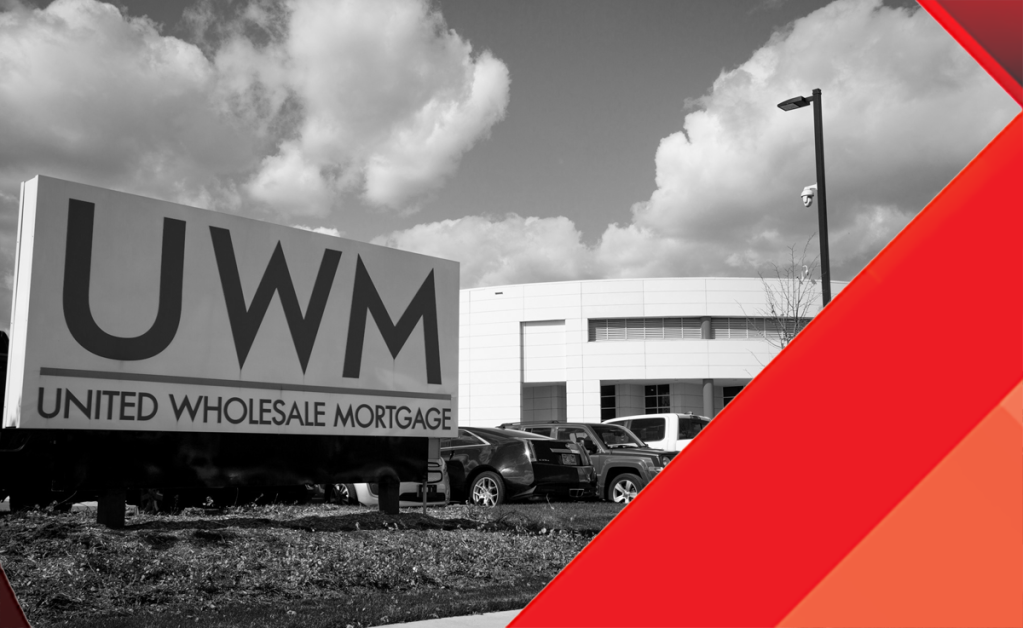 United Wholesale Mortgage (UWM) rolled out a new purchase product that will waive mortgage insurance payments if a borrower opts for a 10.01%-or-more down payment. But borrowers would be wise to note that they’ll get hit with higher interest rates. The product, dubbed "MI Buster," will be available for conventional purchase loans starting at $200,000, as well as for high-balance loans with a loan-to-value ratio between 80.01% and 89.99%, according to a press release issued by the Pontiac, Michigan-based lender on Wednesday. Typically, if a borrower opts for a conventional loan and puts down less than 20%, they must pay for mortgage insurance until they accumulate 20% of equity in their home, a condition generally set so the loan can be sold on the secondary market. Once that happens, mortgage insurance is usually waived. The wholesale lender’s new product allows a borrower to forgo this step. UWM, which will not be selling loans with “MI Buster” to Fannie Mae or Freddie Mac and will retain servicing on them, said in a statement that this product "provides a competitive advantage for independent mortgage brokers, allowing them to save their borrowers money on their monthly mortgage payments." "With mortgage rates on the rise, the elimination of MI can also help borrowers, including first-time homebuyers, get more home for their money, along with a more manageable monthly payment," the top wholesale lender said in a statement. However, UWM’s "MI Buster" program raises questions about whether the interest rate for this product will be significantly higher than that of a conventional 30-year-mortgage. Alex Naumovych, a retail loan officer at Draper & Kramer Mortgage Corporation, said that the product roll-out appears to be a marketing move by UWM to gin up purchase business. "Customers hear that you don't have to pay MI and they get excited, but they don't realize that they will have a higher mortgage payment for the life of the loan," said Naumovych. "It’s very likely that [this product] will have a higher interest and maybe it will not be half a percent higher, because people already put in 10%, but it may be at least a quarter percent higher." In response to inquiries from HousingWire, a UWM spokesperson noted that "interest rates could be higher compared to a program with MI, however, the all-in rate/payment is lower in almost all situations, compared to [borrower paid mortgage insurance] or [lender paid mortgage insurance]." Naumovych remarked that by offering this product, the lender is not necessarily going out on a limb since the market is appreciating and properties will continue going up in value. "Also, they're requiring a 10% down payment, so it is unlikely for a person to walk away from the house," he noted. Earlier in November, UWM also introduced jumbo ARMs for its broker partners, touting that their prime jumbo ARMS allow brokers to offer “competitive pricing” on five-, seven- and 10-year adjustable-rate mortgages. The post UWM waives MI with a 10.01% down payment, but there’s a catch appeared first on HousingWire. |
| Is UWM’s plan to shed the “meme stock” label? Posted: 18 Nov 2021 08:30 AM PST  Mat Ishbia and his family will slightly reduce their ownership of United Wholesale Mortgage (UWM), a step to make the company more attractive to long-term investors – and, hopefully, to leave behind the “meme stock” label, according to analysts who follow the wholesale lender. UWM Holdings Corporation announced on Tuesday that its controller shareholder SFS Holding Corp. – a holding firm controlled by Mat Ishbia and his father, Jeffrey Ishbia – is selling 50 million Class A common stocks on a secondary offering. According to the company, no shares are being sold by UWM. Instead, SFS will receive all proceeds. J.P. Morgan and BofA Securities are acting as joint lead book-running managers. The secondary offering has the potential to bring $297.5 million to the family (at $5.95 per share on Nov. 17). If underwriters purchase an additional 7.5 million shares available at the public offering price, the family can receive to $342.1 million. However, SFS’s ownership would decrease from 93.6% to 90.6% of Class A common stocks. “It is hard to garner up a lot of institutional investor interest in this stock. Only because the CEO ends up owning a big chunk of the company,” said Kevin Heal, senior analyst and fixed income strategist at Argus Research. Institutional investors usually look for companies with at least 20% public float, Heal said. “But the transaction will increase the public float and decrease the amount of ownership level that the CEO and affiliated family members have in the company.” Still, according to SEC documents, SFS has around 79% of the combined voting power. In addition, as long as SFS owns at least 10% of the outstanding common stocks, it will have the final word on actions requiring stockholder approval, such as removal of directors and board size. Heal said that the secondary offering is a sign that UWM does not want to be a “meme stock,” a phrase used for stocks that had gone viral online by attracting retail investors. If cheap and with a small public float, these stocks can be more volatile. UWM declined to comment, citing Securities and Exchange Commission rules. According to one analyst from a big bank, who preferred not to be identified, the impact of the secondary offer will be a reduction in the stock price in the short term. On Wednesday, UWM closed at $5.95 a share, a 9.98% decline from Tuesday. But, according to the same analyst, in the long term, the company may attract more institutional investors, bringing more stability and pushing prices up. The transaction also puts the company closer to the S&P 500 index, which requires a 10% public float level, among other rules, such as having a market capitalization of at least $11.8 billion and four consecutive quarters of positive earnings. From January to September, UWM, the nation's largest wholesale lender, originated $171.3 billion in residential mortgage loans, an increase of 34% year-over-year. During the first three quarters of 2021, UWM reported $1.33 billion in net income, down 34% compared to the same period of 2020, arguably the industry's biggest boom period. On Monday, UWM announced plans to borrow $500 million through notes that come due in 2027, at a 5.75% interest rate. The proceeds will "be used for general corporate purposes and to fund future growth," UWM said. Analysts said the company has a "comfortable" debt situation. According to analysts, overall mortgage activity is expected to cool down in the coming years as interest rates rise, putting pressure on profit margins and challenging mortgage executives to overcome the cyclical nature of the industry. Ishbia has been outspoken in his belief that UWM's position as the top wholesale lender gives it an edge in purchase business compared to its competitors. He's also noted that UWM can generate profits in difficult market conditions when others cannot because UWM's cost to originate a loan is lower. But, like many of its chief rivals, UWM's stock has sagged. And, like its rivals, it's engaging in stock buyback programs. UWM announced a $300 million buyback in May. And on Tuesday, the company said it will buy $100 million in stocks owned by Ishbia-helmed SFS Holding Corp., at the same price as the secondary offer, paid with existing cash. In the third quarter earnings call with analysts, Tim Forrester, UWM’s chief financial officer, said the company will continue to evaluate opportunities for buying back more stocks in future quarters. “Those efforts will continue to be balanced with our desire to maintain or even establish more float for investors and maintain our profile and availability for future long-term investors.” He mentioned the company had acquired approximately 2.7 million shares through a stock buyback program for roughly $21 million to date. UWM went public in February after merging with a special purpose acquisition company (SPAC) called Gores Holdings IV. The company at the time had a valuation of $16.1 billion. On Thursday, the company's market cap was down to $9.2 billion. The post Is UWM’s plan to shed the “meme stock” label? appeared first on HousingWire. |
| Mortgage rates climb back up, to 3.10% Posted: 18 Nov 2021 07:00 AM PST Mortgage rates strongly increased above 3% in the week ending November 18, according to the latest Freddie Mac PMMS mortgage report. The 30-year fixed-rate mortgage hit 3.10%, up 12 basis points from 2.98% the week prior. A year ago at this time, the average 30-year fixed-rate loan averaged just 2.72%. Sam Khater, Freddie Mac's chief economist, said the combination of rising inflation and consumer spending is driving mortgage rates higher. "Shoppers looking to buy a home are fueling strong demand while ongoing inventory shortages are not improving in the presence of higher home prices," he said in a statement. The survey focuses on conventional, conforming, and fully amortizing home purchase loans for borrowers who put 20% down and have excellent credit. Economists at Freddie Mac said the 15-year fixed-rate mortgage averaged 2.39% last week, up from 2.27% the week prior. It's also higher than it was a year ago, at 2.28%. Meanwhile, the five-year ARM dropped slightly to 2.49%, down three basis point from last week. A year ago, 5-year ARMs averaged 2.85%. Lenders – Now is the time to prioritize lead generation HousingWire Editor-in-Chief Sarah Wheeler and Deluxe Senior Business Development Executive Mark McGuinn discuss the challenges lenders are facing to optimize lead generation, even as mortgage rates continue to change. Presented by: DeluxeMortgage rates tend to move in concert with the 10-year Treasury yield, which reached 2% on Nov. 15, up from 1.89% a week before. Joel Kan, associate vice president of economic and industry forecasting at the MBA, said refi applications decreased for the seventh time in eight weeks, as mortgage rates increased following two weeks of declines. The MBA projects that by the end of 2022, mortgage rates will approach 4%. The trade organization believes the heavy refi activity that drove the market in 2020 and much of 2021 will give way to purchase business over the next two years. The post Mortgage rates climb back up, to 3.10% appeared first on HousingWire. |
| You are subscribed to email updates from Mortgage – HousingWire. To stop receiving these emails, you may unsubscribe now. | Email delivery powered by Google |
| Google, 1600 Amphitheatre Parkway, Mountain View, CA 94043, United States | |




No comments:
Post a Comment